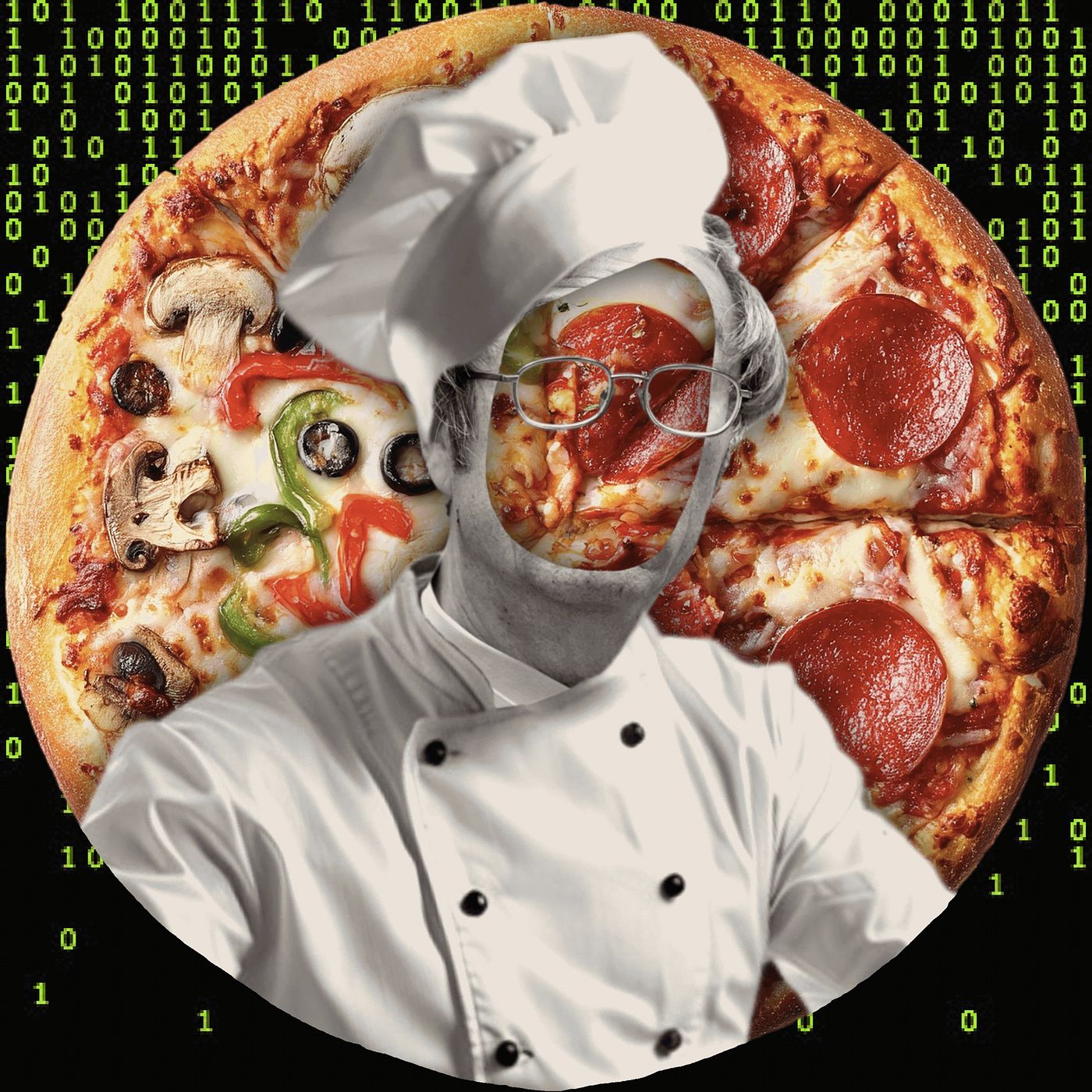
Rebecca Rose’s Satoshi’s Secret Sauce treats AI as one stage in a collage practice, not as a substitute for the artist’s hand.
- The work was released through Verse for Bitcoin Pizza Day.
- It combines analog collage thinking with image-generation tools.
- A 24-hour open edition links digital circulation to a crypto ritual.
Rebecca Rose’s Satoshi’s Secret Sauce arrives with the kind of title that could invite a predictable crypto joke. The work is more interesting than that. Released through Verse in partnership with OpenSea and PizzaDAO for Bitcoin Pizza Day on May 22, 2026, it uses the occasion to examine how a collage artist can move between physical fragments, software prompts, and a finished digital image without treating those stages as interchangeable.
Collage after the prompt
The work’s central material is not a single model output but a chain of translation. Rose’s practice is rooted in collage, and the release describes a process that places digital tools inside that longer history of cutting, recombining, and reframing. Rather than presenting artificial intelligence as an autonomous author, the project positions it as an instrument whose behavior still has to be directed, edited, and understood.
That distinction matters in a market crowded with images whose production stories begin and end with a prompt. Rose has spent more than two decades working across analog, sculptural, and digital collage, according to Verse’s release page. The work’s context therefore runs against the idea that using an image model automatically erases an artist’s prior methods. Here, the model enters an existing visual language rather than creating one from nothing.
The release was presented as a 24-hour open edition, with a 2,500-by-2,500-pixel file listed at 15.2 megabytes. Those details are ordinary enough to look like metadata, but they also reveal the project’s balance between ephemerality and repeatability. The edition was available for a limited window, while the image itself could circulate as a stable digital object after the event had passed.
Bitcoin as occasion, not subject
Bitcoin Pizza Day commemorates the first widely recognized real-world purchase made with bitcoin. Rose’s work does not illustrate that history literally. Instead, its release uses the date as a cultural frame: a moment when a technical system became visible through an everyday act of exchange. The connection lets the artwork ask what happens when another technical system—an image model—enters the familiar language of popular culture, collectibles, and online participation.
The answer is deliberately less triumphalist than much AI-art marketing. The work does not promise that software has solved collage, nor does its crypto association prove artistic value. It offers a compact example of how an artist can use a commemorative event to make process visible. The token becomes a record of participation, while the image carries the slower questions about selection, taste, and authorship.
That tension is where Satoshi’s Secret Sauce earns attention. Its subject is not whether AI can make a convincing picture. It is whether viewers can still sense the decisions that turn fragments into a composition when the fragments have passed through a machine. Rose’s answer is a practice-based one: keep the chain of transformations in view, and let the artwork remain accountable to the person arranging them.