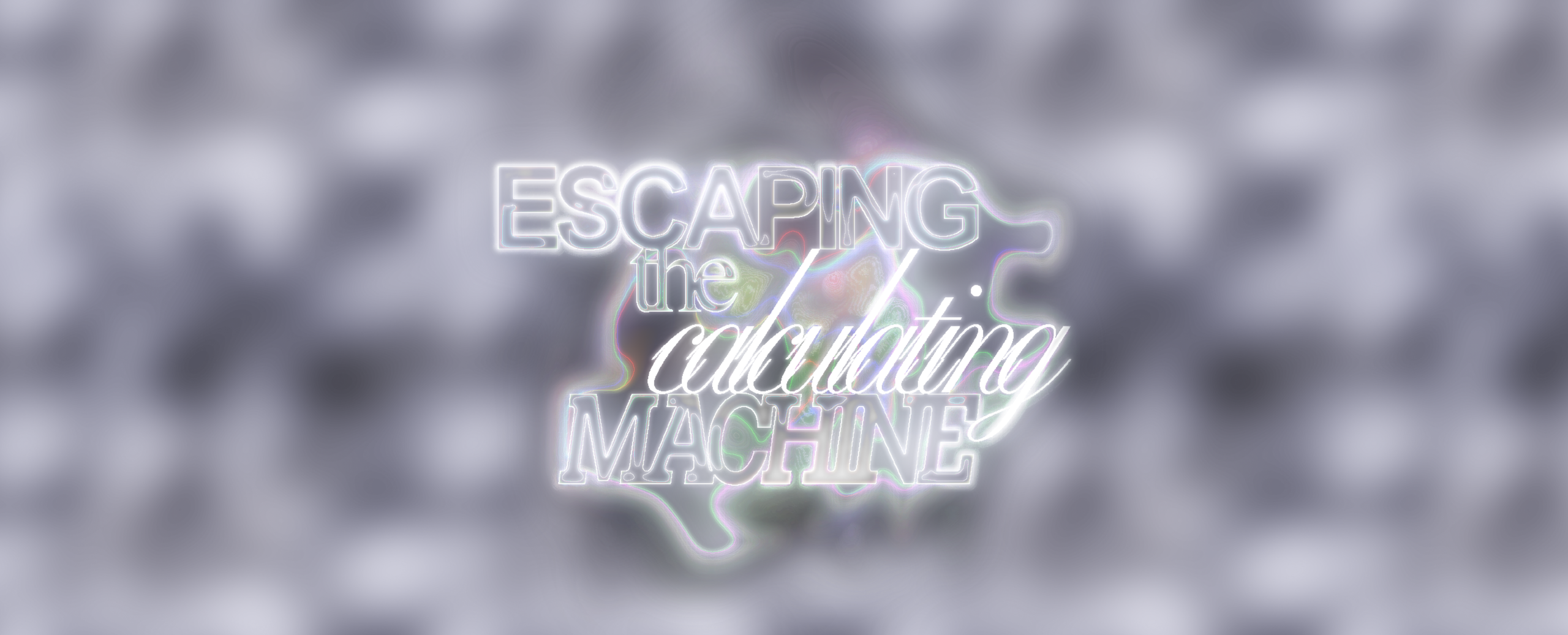
Digital art is often described as frictionless: a file moves instantly, a model generates endlessly, and a screen hides the machinery beneath the image. Rhizome’s Escaping the Calculating Machine pushes against that description. The collection, released with SuperRare in support of Rhizome’s microgrants program, treats software not as a neutral delivery system but as a set of constraints that artists learn, exploit, and sometimes resist.
The project marks Rhizome’s 25th year of commissioning art online while arriving at an awkward moment for computer culture. Generative AI has made it easy to produce images and code without seeing the underlying process. In response, the collection asks eleven artists to reflect on the tools, limitations, and subcultures that shaped their practices. Its central question is less whether a computer can make an image than what disappears when the making becomes unreadable.
When limitations become a language
The artists gathered here do not share a single style. Nicolas Sassoon works with the visual vocabulary of pixels and screens; Raquel Meyers returns to obsolete technologies including the Commodore 64, teletext, typewriters, and fax machines; and Parker Ito moves across installation, painting, sculpture, video, websites, and printmaking. Their common ground is a willingness to let a medium’s peculiarities remain visible.
That visibility matters. A crash report, a workaround, an old interface, or an unexpectedly rigid file format can become part of an artwork’s cultural texture. Instead of treating technical limitations as obstacles on the way to a polished result, Escaping the Calculating Machine frames them as evidence of contact between a person and a system. The image carries traces of the forum, the software version, the machine, or the community that made it possible.
The collection’s range also complicates the familiar opposition between handmade art and automation. Botto, described by Rhizome as a decentralized autonomous artist, represents an image-making system that operates continuously. Alongside it are artists whose practices depend on obsolete hardware, animation, character design, or highly specific digital subcultures. The point is not that one method is more authentic than another. It is that authorship becomes more legible when the conditions of production are allowed to remain part of the work.
A fundraiser with an argument inside it
There is a practical dimension to the project. SuperRare’s collection offers 1/1 NFTs and limited-edition prints, and Rhizome says that at least 25 percent of proceeds will support its 2026 microgrants program. The arrangement links collecting to the infrastructure that helps new online art exist in the first place. A purchase is not presented only as acquisition; it also helps finance future experiments.
That model is worth noticing because digital art’s tools are never just technical. They are economic and institutional, too. Platforms determine how work circulates, archives determine what remains available, and grants determine which experiments can be attempted before an audience or market has decided they matter. Rhizome’s collection makes that support structure visible rather than pretending that digital culture grows without maintenance.
Escaping the Calculating Machine ultimately argues for a less flattened account of computer-made art. The most interesting work may not be the work that looks most seamless or demonstrates the newest system. It may be the work that reveals a stubborn attachment to a particular machine, a strange interface, a local online scene, or a human decision that an algorithm cannot easily explain. In that sense, escape does not mean leaving computation behind. It means refusing to let computation be the only story.