Art Blocks and OpenSea’s Marfa residency places generative art’s technical labor inside a physical community rather than treating the blockchain as the whole story.
- Jiwa is the program’s first selected artist.
- The four-week residency combines housing, a stipend, and studio support.
- Its real test is whether place can change code-based practice.
Generative art residencies often promise time, space, and freedom. The Art Blocks and OpenSea Artist Residency in Marfa adds a more specific proposition: that a software artist’s environment can become part of the work. Its first participant, Jiwa, is scheduled to spend four weeks in West Texas developing a new generative project, with the result eventually returning to the public as both artwork and account of a place.
Why Art Blocks chose Jiwa for Marfa
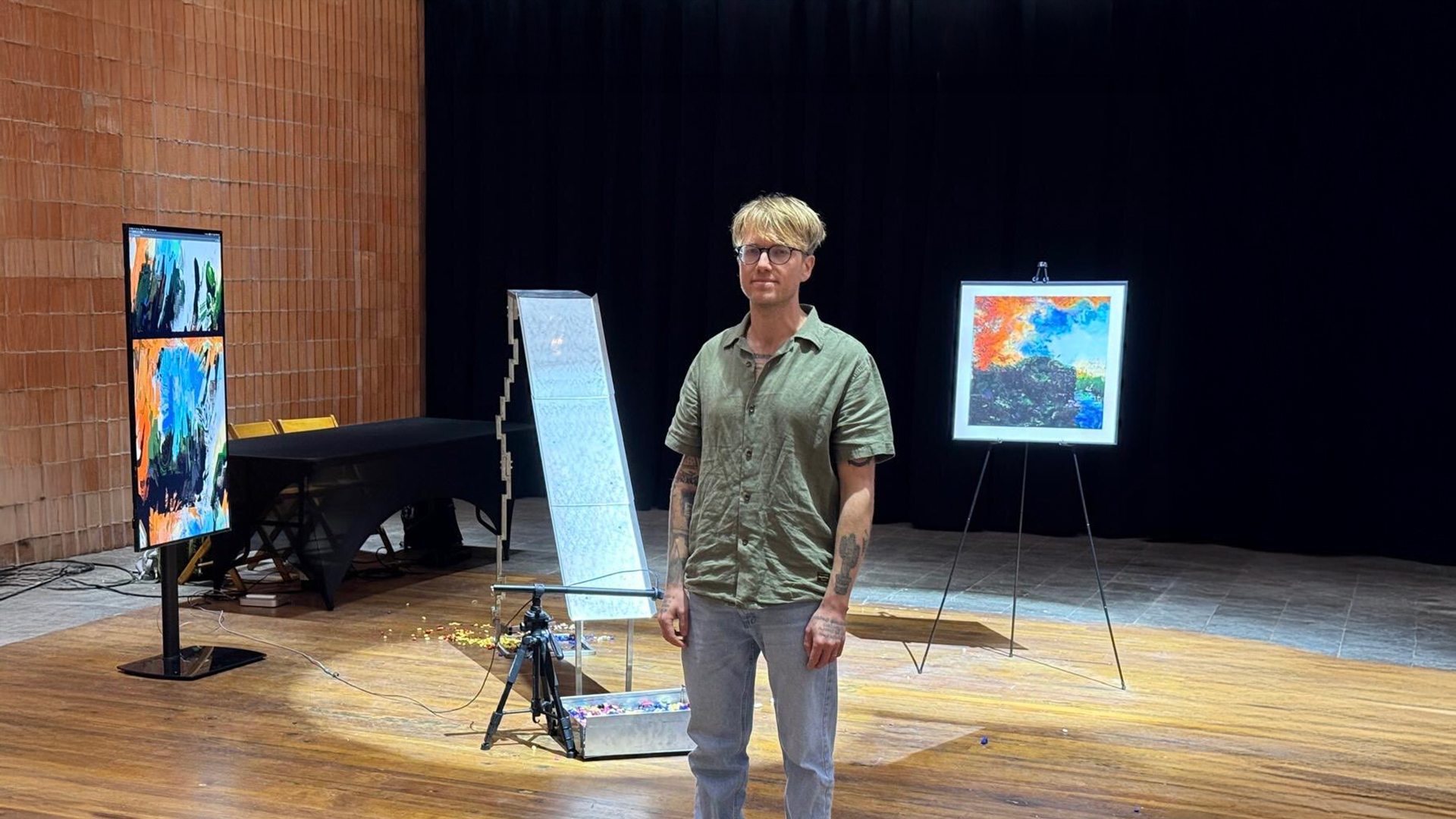
Art Blocks introduced Jiwa as the first artist selected for the residency, which is based at a casita behind the platform’s Marfa gallery. The program is designed for four- to six-week stays and provides accommodations, a stipend, an Art Blocks Studio contract, and dedicated time to make work. The structure matters because it treats generative art as a practice that needs sustained attention, not simply as a code file waiting to be deployed.
Jiwa brings an unusual combination of experience to that setting. According to Art Blocks’ announcement, he has spent 15 years working in creative technology, including senior-level full-stack software architecture and smart-contract development. He also builds and manages the technology for ntent.art. The résumé points to someone who understands the infrastructure behind a blockchain artwork as well as its visible form.
That technical background is not presented as an end in itself. Art Blocks describes Jiwa’s work as generative narratives about inner worlds, and the artist has connected his practice to environmental and sociopolitical causes. His account of growing up around the surf and skate culture of Virginia Beach is revealing: he says he became comfortable creating with whatever was available and now needs only a computer. Marfa therefore becomes less a retreat from technology than a new set of constraints around it.
A residency is not the same as a drop
The residency’s most interesting feature is what it postpones. There is no announced collection, supply, price, or token mechanic attached to Jiwa’s stay. Instead, the program reserves a period for experimentation and promises a presentation to the local Marfa community at its conclusion. That emphasis resists the usual sequence in which a generative project is introduced through its market metadata before anyone has seen the conditions in which it was made.
This does not make the blockchain irrelevant. The planned Art Blocks Studio contract places the project within a system built around algorithmic generation, provenance, and collector participation. But the residency frames those tools as part of a longer creative process. The eventual work will have to do more than demonstrate that a script can produce variation; it will have to show what changed when the artist spent a month inside Marfa’s art scene.
That is the useful question for the program as it develops. A place cannot automatically make software more meaningful, and institutional support is not proof of artistic innovation. Yet a residency can expose the human decisions that marketplace interfaces tend to compress: what an artist notices, what they discard, which local encounters enter the system, and why a particular output deserves to exist. Jiwa’s Marfa project will be worth watching precisely because its strongest claim is still unresolved.
Source: Art Blocks’ residency announcement.