ICONS 6:12 places photographed bodies inside a generative system where authorship emerges through repeated choices, refusals, and revisions.
- Scerbo and Fakewhale Studio made 300 unique works inscribed on Ethereum.
- The project transforms photographic memory into unstable computational figures.
- Its public materials leave the precise model mechanics undisclosed.
When Scerbo’s photographs enter the generative system built by Fakewhale Studio, the body does not disappear. It becomes the problem.
ICONS 6:12, released through Fakewhale and Verse on September 30, is a series of 300 unique generative 1/1 works. The project began during the 2025 Fakewhale Digital Residency and grew from a collaboration between Scerbo’s photographic practice and the studio’s system of model orchestration, selection, refusal, and revision. The works are inscribed on Ethereum as ERC-721 tokens. Verse listed them at $80 during the presale and $110 during the public release.
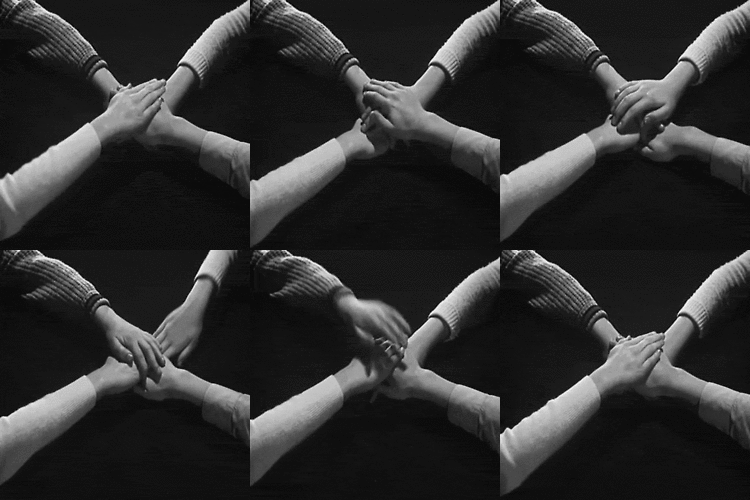
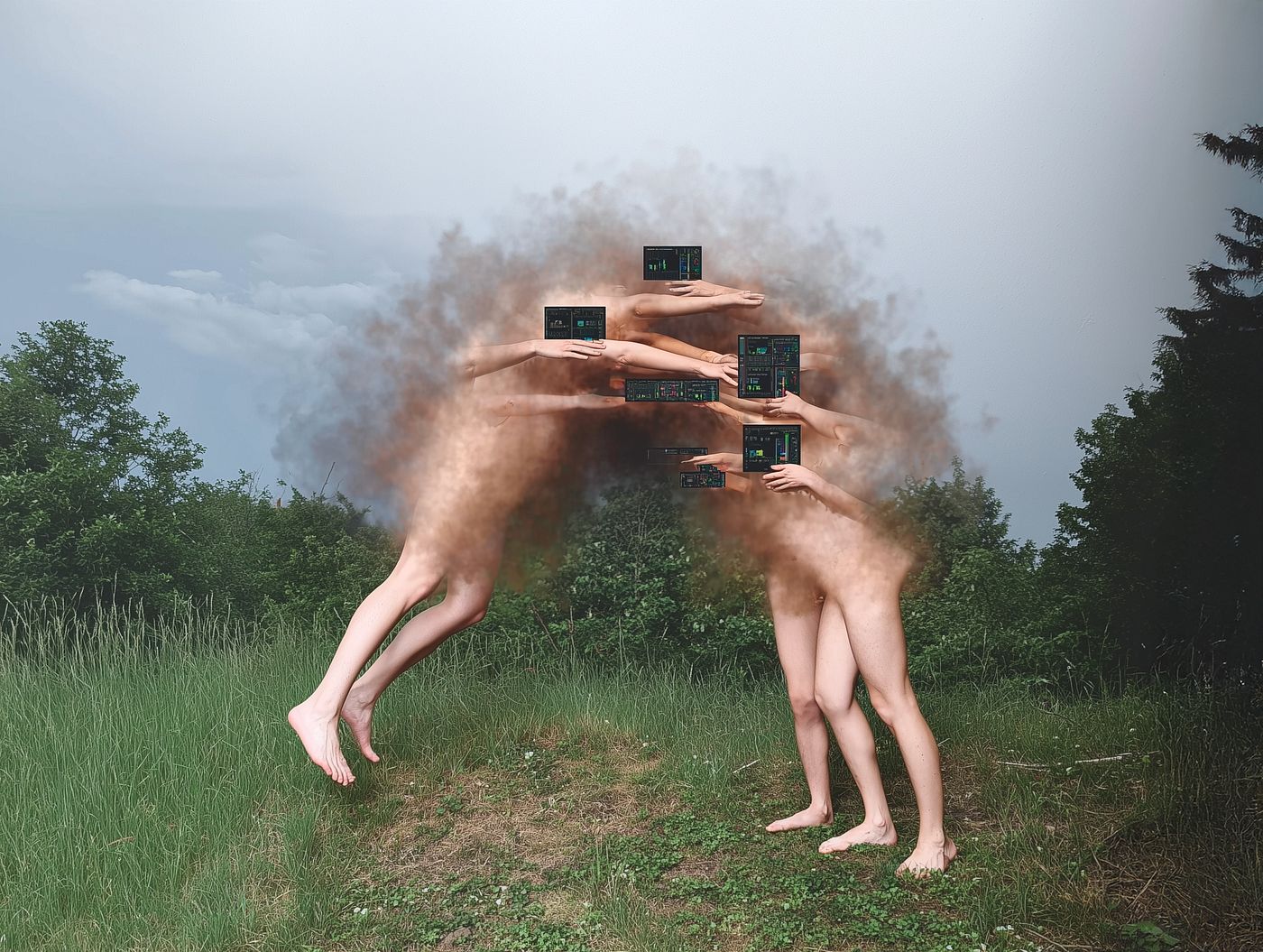
That description makes the collection sound like a familiar AI-art pipeline. The more revealing detail is the material it starts with: photographs of bodies, already loaded with relationships and memory before a model touches them. Fakewhale’s own account of the project describes figures in rooms, on grass, and against asphalt, then shows those figures breaking into sequences, particles, cables, and other structures. The ordinary setting matters. These are not weightless hallucinations floating in an abstract digital space. They are bodies being asked to carry more signals than a single body can comfortably hold.
From Photographs to a Shared Visual Grammar
A collaboration built through return
The series extends a line of inquiry visible in Scerbo’s earlier project Anti-crash, presented by Fakewhale on Verse in 2023. That work used photographs and a digital brush made by corrupting code, with the alpha channel, the file’s system for assigning opacity, becoming a site of intervention. Scerbo described the process as “creation-photo-destruction”: a photograph stabilizes a moment, code disrupts it, and another image emerges from the damage.
ICONS 6:12 shifts the emphasis from a single act of corruption to a sustained exchange. Fakewhale says the images passed through an iterative environment in which generation changed the available choices, and selection redirected the next return. The claim is less that a machine made 300 pictures than that the collaboration produced a shared visual grammar over time. Each token is presented as a singular work, but the project asks viewers to read the group comparatively.
That distinction is important in a market built around isolated images. A 1/1 token promises uniqueness at the level of ownership. ICONS 6:12 places that uniqueness inside a larger system, where a fractured face, a repeated gesture, or a mechanical structure can alter the way another work is read. The collection’s unit is the individual image; its subject is the relation among images.
The image moves faster than the person
Fakewhale’s accompanying writing gives the series an expansive theory of digital life, arguing that images and networks reach the body faster than the body can absorb their consequences. The language is grander than the technical information the project makes available. No model list or source code is disclosed on the public pages, so the mechanics remain less visible than the conceptual frame.
What the Model Does Not Explain
Still, the images’ central tension is clear. Photography begins with a body located in a particular place and time. Generative processing breaks that body into forms that can be multiplied, circulated, and assigned value. The work does not resolve the conflict between those states. It makes the conflict visible.
This is where ICONS 6:12 is more interesting than a simple claim about AI and creativity. Authorship sits in the chain of decisions: what enters the system, what is refused, what returns, and what is kept. The generative apparatus expands the field of possible images, but it does not explain why one fractured body should remain while another is discarded. That judgment remains part of the work’s human and institutional structure.
Verse’s listing identifies the collection as a 2026 release on Ethereum. Its deeper proposition is older and more difficult: every image that promises to extend a body also changes the conditions under which that body can be seen. ICONS 6:12 turns that proposition into a population of unstable figures, each one caught between photographic memory and computational transformation.